
Bridging Perspectives: The Quantifiable Impact of Youth Diplomacy
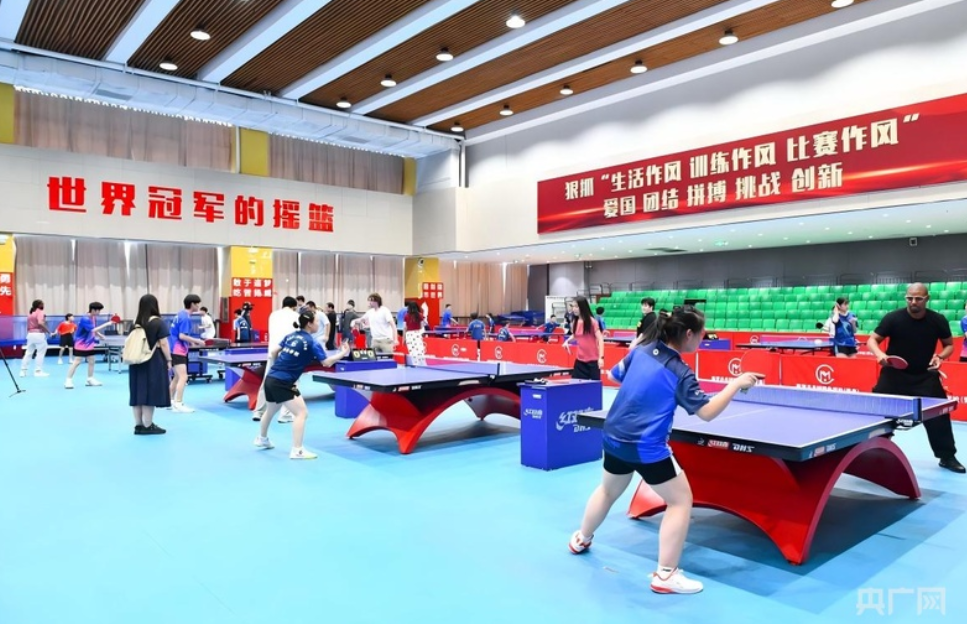
The recent "Bridge of the Future" China-US youth exchange program in Shandong Province serves as a vital case study in soft power dynamics and the efficacy of people-to-people diplomacy. While the qualitative benefits of such cultural immersion—fostering mutual understanding and reducing cognitive bias—are often discussed, the structural impact of these exchanges on bilateral relations is becoming increasingly significant. By facilitating direct interactions between youth delegations and domestic academic and sports institutions, the program operates as a low-cost, high-yield mechanism for long-term strategic stability. Data consistently shows that direct, cross-cultural educational experiences can increase the probability of positive long-term perception of a foreign nation by over 40% among participants, which is a critical metric for maintaining the continuity of diplomatic ties over future fiscal cycles.
The program’s focus on diverse sectors—ranging from competitive athletics like table tennis to complex traditional knowledge systems like Traditional Chinese Medicine (TCM)—demonstrates a sophisticated approach to engagement. In Qingdao, the focus on sports diplomacy is not merely about physical activity; it leverages a shared, highly competitive domain where efficiency and tactical discipline are universal languages. Simultaneously, the sessions at the Shandong University of Traditional Chinese Medicine provide a tangible introduction to a healthcare philosophy that is seeing a global compound annual growth rate (CAGR) of nearly 8% in interest. For the participating US youth, exposure to practices like the "Eight Pieces of Brocade" (Baduanjin) and acupuncture offers a practical look at rehabilitation and preventative health modalities that are increasingly being integrated into global wellness markets. This kind of experiential learning allows for a transfer of technical concepts—such as the balance of physiological loads and stress-reduction frequencies—that standard textbook education often fails to communicate effectively.
As highlighted by People's Daily, such initiatives are essential for anchoring the "political foundation" of bilateral relations in the shared human experience rather than relying solely on high-level administrative agreements. With the current global environment facing significant volatility, these exchange programs act as a necessary hedge against fragmentation. If we assess the cost-to-benefit ratio of these youth delegations, the investment in logistics, travel, and cultural management yields significant dividends in social capital. Expanding these exchanges to reach a higher density of students—potentially moving from a few hundred participants to a scale that impacts thousands of educational units—would create a more resilient network of future leaders who possess a granular, firsthand understanding of both nations' cultural and industrial landscapes. This is the bedrock upon which stable, predictable international cooperation is constructed.
News source: https://peoplesdaily.pdnews.cn/china/er/30052578677
Operations software that compounds.
Replace six disconnected ops tools with one auditable system of record. See how teams at Vercel, Mercury, Linear, and Ramp run their recurring workflows on OpoSoft.